Water Heater Repair in Dubai – Central and Solar System
Overview of Dubai’s water heating landscape
Dubai relies on a mix of central water heating and solar solutions that suit its hot climate and water quality characteristics. Homes range from compact villas to large communities, all requiring reliable supply and stable temperatures for kitchens, baths, and laundry.
Emiratefix tailors repairs to manage mineral-rich water and occasional power fluctuations, aiming to preserve performance and energy efficiency. The focus on central and solar systems reflects their practical balance of capacity, cost, and long-term reliability in Dubai.
Real-world scenario: A family in Jumeirah notices a sudden drop in hot water during peak usage. A quick check of the central heater and solar storage reveals a minor valve stiffness and mineral buildup that can be cleared without full replacement, minimizing disruption and preserving efficiency.
Why central and solar systems require specialized service
Central water heaters and solar setups function as integrated networks. Issues in one component can affect the whole system, so precise diagnostics matter. Specialized service focuses on:
- Accurate identification of faults in controllers, heating elements, valves, and pumps. For example, a faulty thermostat can cause uneven temperatures across bathrooms, prompting targeted repairs rather than a full unit swap.
- Correct handling of mineral buildup and descaling to maintain heat transfer and efficiency. Dubai’s mineral content can reduce flow and heat exchange if ignored for months.
- Proper calibration for solar collectors, sensors, and circulation pumps to maximize energy savings. Adjusting sensor placement and pump speed can shave monthly electricity bills in warmer months.
- Safe inspection practices that protect electrical connections and pressure vessels. This includes verifying electrical isolation before work and checking pressure relief devices to prevent leaks or bursts.
Practical steps you can expect during service: a full system briefing, performance tests at various times of day, and documentation of temperature profiles before and after to measure improvement. Emiratefix combines Dubai-specific experience with transparent reporting so you know exactly what was fixed and why.
Evidence-based advantage: Solar-assisted systems can cut heating energy use when properly calibrated and maintained, according to regional energy guides. We translate this into proactive maintenance schedules, not just reactive repairs.
Edge case caveat: In older complexes with mixed pipe materials, mineral blocks may hide behind insulation and reduce flow without obvious signs. Technicians perform targeted flushing and inspect connections at every joint to prevent overlooked blockages.
Choosing a provider with Dubai-specific experience helps prevent recurring problems, reduces downtime, and extends system life. Emiratefix brings technical depth in central and solar configurations, backed by local know-how and prompt service across Dubai neighborhoods.
1. Central Water Heater Systems: What They Are and How They Work
Components of centralized hot water systems
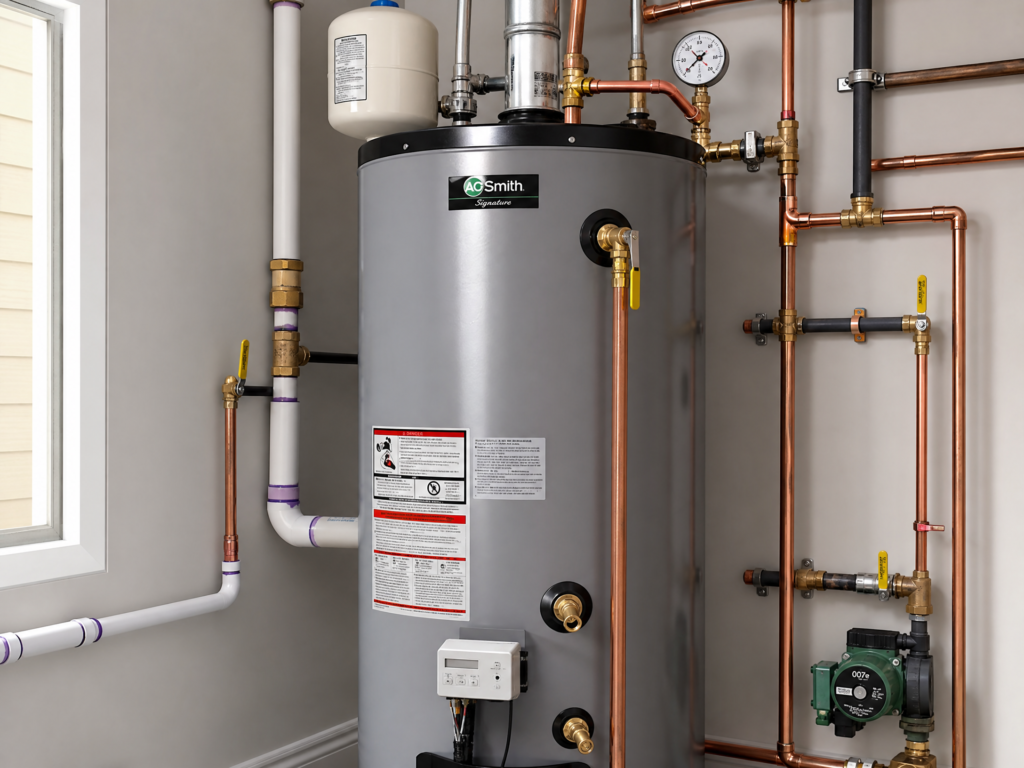
Central water heater systems in Dubai consist of an insulated storage tank, a network of distribution pipes, a primary heating source, and control hardware. These elements work together to deliver hot water to multiple fixtures from a single point of generation.
- Tank and heating elements: The tank stores hot water and uses heating elements or a boiler for energy input, maintaining a ready supply for the home. For example, a 200-liter tank can serve a family of four with showers and laundry throughout the morning.
- Thermal immersion or boiler connection: Depending on configuration, electric coils or a boiler provide the heat, with controls to regulate temperature. In practice, a Dubai apartment might use a boiler in winter and switch to immersion heating during mild months to optimize fuel use.
- Pressure relief and valves: Safety devices prevent overpressure and protect components under load conditions. A TPR valve should be tested annually and replaced every 5, 7 years to prevent leaks during thermal expansion.
- Circulation and distribution: A loop system moves hot water from the tank to taps, showers, and appliances while returning cooled water to reheat. A correctly balanced loop reduces wait times by 5, 15 seconds at the master bath and prevents cold starts in multi-story homes.
- Thermostats and control panels: User-adjustable interfaces manage set temperatures and fault alerts for proactive maintenance. Many systems enable remote monitoring via a smartphone app, allowing you to shut off heating if you’ll be away for extended periods.
Common issues and symptoms in central systems
Knowing typical faults helps pinpoint repairs quickly and minimize downtime, with emphasis on safe inspection and precise component replacement.
- Thermostat failures: Inaccurate temperature readings or unstable setpoints lead to inconsistent hot water delivery and energy waste. If taps run consistently warm but then suddenly cool, check for a drifting sensor or a loose wiring connector.
- Heating element problems: Elements can burn out or scale over time, causing weak or no heat at taps. Scale buildup can be mitigated with a yearly descaling routine and the use of local descaling chemicals suitable for Dubai water hardness.
- Pressure valve concerns: Malfunctioning relief valves may trigger leaks or false pressure warnings, risking tank damage. If you hear popping sounds or see dampness near the valve, schedule replacement and inspect the discharge pipe for blockages.
- Flushing and sediment buildup: Mineral deposits reduce heat transfer efficiency, increasing recovery time and energy use. A professional flush every 1, 2 years restores performance, especially in hard water zones along the coast.
- Pump and circulation issues: A sluggish or noisy pump disrupts steady hot water supply and creates uneven temperatures across zones. Inspect for air locks, clean or replace the impeller, and verify electrical connections to prevent random outages.
- Leak detection: Piping or tank seams may drip due to age, corrosion, or improper installation, signaling urgent attention. Early signs include damp cabinets, mineral staining, or rising utility bills after a cold spell.
2. Solar Water Heater Systems: Types and Benefits
Thermal solar vs. evacuated tube systems
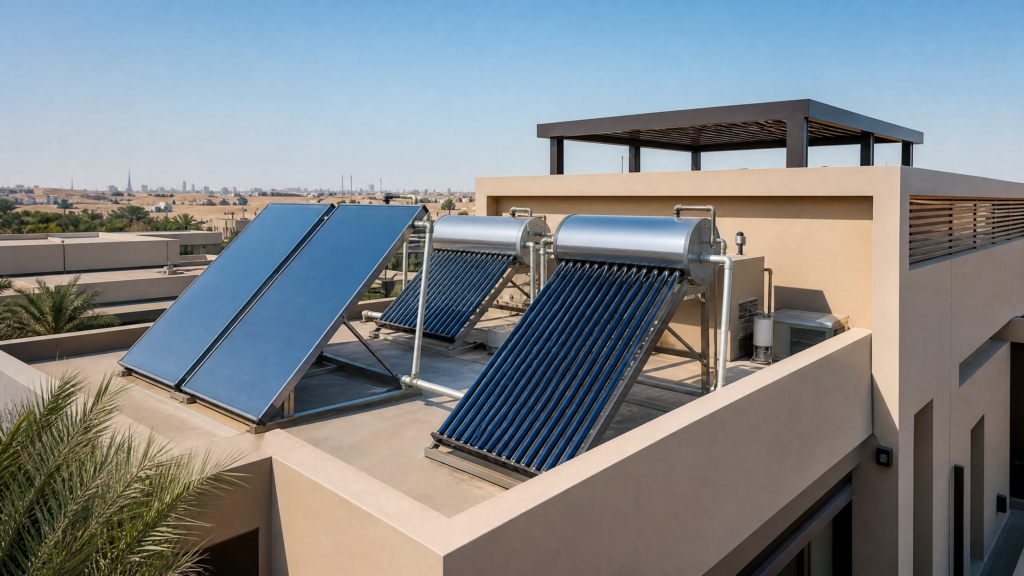
Dubai homes benefit from solar setups tuned to the climate. Thermal solar systems use flat-plate collectors to heat water in the storage tank, while evacuated tube systems use glass tubes that capture heat more efficiently in variable conditions. Both connect to a storage tank and a circulation loop serving taps and showers.
- Thermal solar: Durable, lower upfront cost, strong performance in bright sun, easier rooftop installation.
- Evacuated tube: Higher efficiency in cooler or partly shaded days, better low-light performance, compact footprints for tight rooftops.
- Common considerations: Aesthetics, compatibility of heat transfer fluids, and integration with electric backups.
Energy savings and UAE climate considerations
In the UAE, solar heaters perform best with reliable controls and regular maintenance. Proper calibration of sensors, efficient circulation, and solid tank insulation maximize savings and ensure hot water reliability during peak periods.
- Sun exposure optimization: Panel placement and tilt are tailored to site orientation for year-round heat capture.
- Descaling and mineral management: Dubai’s mineral-rich water can affect heat transfer; regular descaling preserves efficiency.
- Storage and redundancy: Adequate tank size and backups prevent shortfalls during cloudy days.
- Maintenance cadence: Routine checks of collectors, wiring, and pump operation support consistent output.
How to choose between thermal and evacuated tube for your Dubai home
Assess roof space, water demand, and climate nuances. Thermal systems suit sites with ample sun and space, while evacuated tubes excel when shading or variable conditions limit performance.
- Concrete example: A family with a south-facing roof installs evacuated tubes and sees notable improvements in morning hot water recovery.
- Practical tip: Size the storage tank to roughly 1.5 times daily hot water needs to cover back-up days.
- Edge case: In very hard water areas, prioritize mineral-tolerant materials and plan for regular descaling in the budget.
Installation and system integration steps
Plan a phased rollout to minimize disruption and ensure compatibility with backups. Begin with a site survey, select components, and schedule installation during cooler periods when possible.
- Step 1: Assess roof load, orientation, shading, and mounting options for collectors and storage.
- Step 2: Choose corrosion-resistant piping, compatible transfer fluids, and a controller that can switch to electric backups when needed.
- Step 3: Run pressure tests and a performance log over two weeks to verify heat rise and savings.
Common mistakes to avoid
Avoid oversized tanks, skipped descaling, and neglect of local water chemistry. Mismatches between collector type and storage volume reduce efficiency and lengthen payback.
- Mistake: Underestimating daily hot water peaks leading to cold starts.
- Mistake: Skipping regular descaling which degrades heat transfer over time.
- Mistake: Inadequate surge protection and poorly chosen pumps can cause unstable performance.
Maintenance and monitoring tips
Establish a quarterly check and use an energy monitor to compare hot water output with consumption. Track sensor readings and pump currents to detect drift early.
- Tip: Schedule professional descaling and system tuning twice yearly where needed.
- Tip: Maintain an accessible log with dates, readings, and anomalies for future upgrades.
- Tip: Use a timer-based pump to reduce standby losses and extend component life.
Summary: In Dubai, choosing between thermal and evacuated tube hinges on roof space, climate variability, and maintenance capacity. Both systems offer strong hot water reliability and energy savings when matched with proper controls, tank sizing, and regular upkeep.
3. Typical Repair Services for Electric Water Heaters in Dubai
Thermostat and heating element replacement
Faulty thermostats or failing heating elements cause inconsistent hot water and temperature swings. By testing during service, technicians confirm accurate control and reliable heat delivery. Replacement parts are matched to the model to maintain system efficiency and avoid incompatible components.
- Diagnostics: Measure outlet temperature at multiple points and verify element continuity with a multimeter to confirm failures rather than false alarms.
- Component selection: Choose genuine or OEM compatible thermostats and coils rated for your boiler or tank, ensuring compatibility with control circuits and safety features.
- Installation: Torque connections to manufacturer specs, verify grounding, and run a post install test to ensure stable temperature ramps and no overheating.
Leak detection and valve repair
Visible or hidden leaks waste energy and can cause corrosion or water damage if ignored. Our approach pinpoints the source quickly and restores seal integrity. Valve health is essential for safe, reliable operation in Dubai’s climate, where high ambient temperatures can accelerate wear.
- Leak localization: Perform pressure tests, dye injection checks, and thermal imaging to identify drips from tanks, fittings, or connections, including behind panels.
- Valve servicing: Inspect pressure relief and shut-off valves, clean seats, replace worn seals, and reseat components to prevent overpressure and accidental discharge.
- Repair or replacement: Install new seals, gaskets, and valve bodies with weather-rated materials designed for hot climates and frequent cycling.
| Repair Focus | What We Do | Benefits |
|---|---|---|
| Thermostat replacement | Test, select, and install a calibrated thermostat matching your system and climate needs | Stable temperatures, reduced energy usage, longer equipment life |
| Heating element replacement | Assess coil condition, remove old element, install new one with proper seating | Consistent heat delivery, faster recovery after draw-offs |
| Leak detection and valve repair | Trace leaks, service valves, reseal or replace components with corrosion-resistant parts | Prevents water damage, maintains system pressure and safety |
Across Dubai neighborhoods, Emiratefix brings controlled, methodical repair workflows to central water heaters. Our technicians verify compatibility, test post-repair performance, and document settings for future maintenance. For every job, we record model numbers, serials, and warranty details to support ongoing service and easy future part sourcing.
4. Solar System Repair and Maintenance Practices
Descaling, collector inspection, and pump service
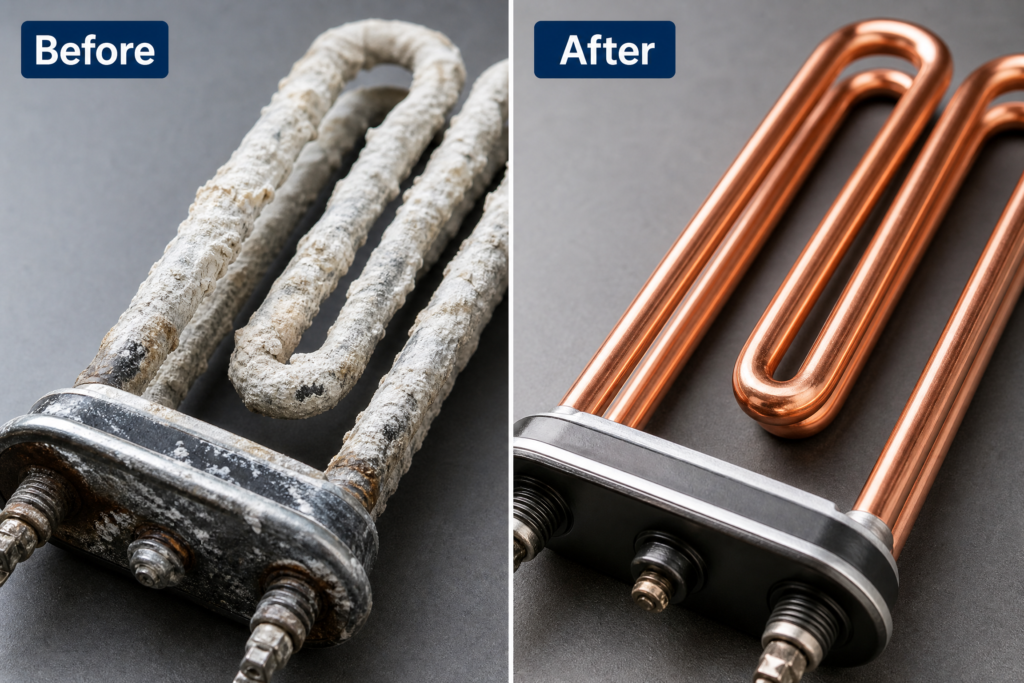
Dubai’s mineral-rich water makes scaling a regular concern for solar water heater systems. Descaling restores heat transfer efficiency by removing mineral buildup from collectors and storage tanks. Regular collector inspection helps catch micro-cracks or loose fittings before they escalate. Our team at Emiratefix uses industry-grade descalants and precision inspection techniques to protect system integrity.
Real-world scenario: A villa with a 250-liter storage tank notices slower hot water recovery after months of peak sun. A descale reduces mineral bridges inside the panel manifold, restoring heat exchange within two service cycles. A spare pump and coated fittings are kept on hand to minimize downtime.
Actionable tip: Schedule descaling at the start of the hot season and again mid-season if your area has unusually hard water. Use a water hardness test kit to determine if you need a stronger descalant or a pretreatment filter.
- Descaling: Chemical or mechanical methods remove mineral deposits that reduce efficiency.
- Collector inspection: Visual and thermal checks identify damaged cells, insulation gaps, or mounting issues.
- Pump service: Circulation pumps are tested for flow, noise, and vibration; seals and bearings are serviced or replaced as needed.
Preventive maintenance schedules and AMC options
Structured maintenance plans keep solar systems performing reliably across Dubai’s seasons. Emiratefix offers preventive schedules tailored to panel type, storage capacity, and usage patterns. We document all service steps to support long-term performance tracking.
Real-world scenario: A resort with multiple solar tanks benefits from a quarterly PM where sensor calibration coincides with seasonal spikes in usage, ensuring hot water availability during high-demand events.
Actionable tip: Build a maintenance calendar that aligns with utility rates and solar production cycles. Include a quarterly check of flash indicators and the controller logs to catch drift early.
- Preventive maintenance: Regular checks on sensors, wiring, and insulation to prevent unexpected downtime.
- AMC options: Annual or semi-annual contracts that include routine descaling, sensor calibration, and parts discounts.
- Documentation: Post-service reports with performance readings and recommended actions for continued efficiency.
5. Hybrid and Alternative Solutions: Electric-Solar Hybrids and Tankless Options
Hybrid system diagnostics
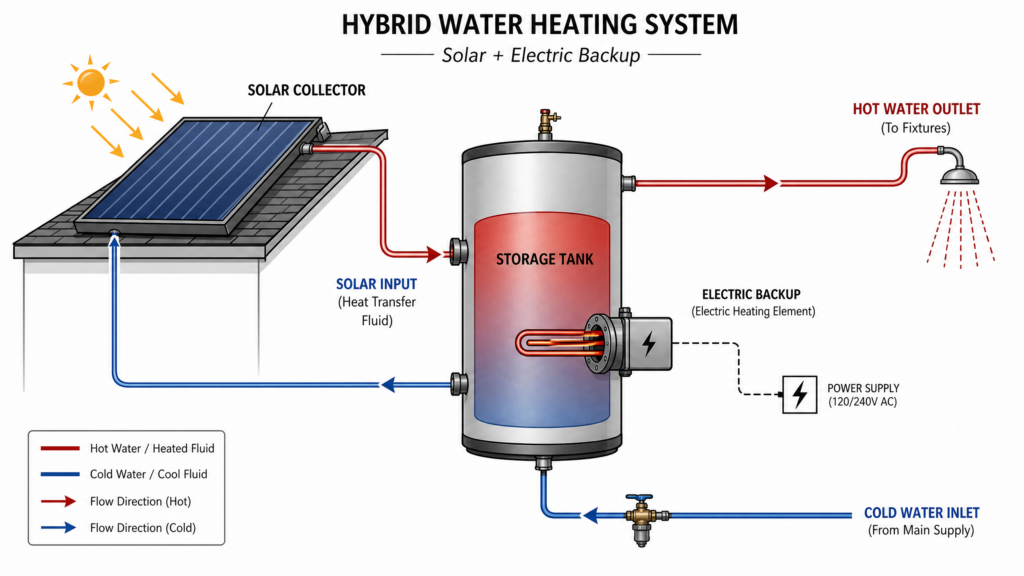
Hybrid systems blend electric heating with solar inputs to ensure hot water during low sun. Emiratefix conducts diagnostics to verify each source’s contribution under Dubai’s climate. We assess sensor accuracy, controller logic, and flow rates to balance performance and energy use.
- Control strategy: We review how the system prioritizes solar when available and switches to electric heat during cloudy periods. Practical step: run a two-week log of solar hours and heat events to confirm the strategy matches real weather patterns.
- Heat exchanger integrity: Our technicians inspect for corrosion or scaling that could impede heat transfer between sources. Example: a 2 mm scale layer can reduce efficiency by up to 15 percent, so we measure transfer rates at multiple temperatures.
- Electrical safety: Wiring, fuses, and inverters are tested to prevent faults and ensure proper isolation during switching. Step: perform insulation resistance tests and verify automatic disconnection when faults are detected.
When to consider tankless or electric backups
Tankless or electric backup options can offer rapid heat response and space-saving advantages in tight Dubai villas and apartments. Emiratefix guides you through suitability considerations, installation implications, and long-term maintenance needs. Real-world example: a 2-bedroom apartment with limited cabinet space can benefit from a wall-mounted tankless unit that delivers hot water instantly at the tap.
- Demand patterns: If your hot water usage spikes in mornings or evenings, a responsive backup can improve wait times. Action: map daily usage in 15-minute intervals for a week to size the backup correctly.
- Space and efficiency: Tankless systems reduce storage footprint but may require upgraded electrical service and venting considerations in some layouts. Practical tip: have an electrician verify service capacity and plan dedicated breakers for backup units.
- System compatibility: We verify that inverters, controllers, and plumbing routes align with your existing central or solar setup. Edge case: if you have phased electrical loads, stagger installation to avoid simultaneous high draw.
Comparison and planning table
| Solution | Ideal Scenarios | Key Considerations |
|---|---|---|
| Electric-Solar Hybrid | Moderate to high hot water demand with ample sun | Smart controls, potential annual maintenance, integration with central or solar systems can be complex |
| Tankless Electric Backup | Limited storage space, quick hot water delivery | Higher instantaneous power draw, possible electrical upgrade, verify plumbing clearance |
| Gas Backup (excluded by policy) | Not applicable here due to focus on central and solar systems | Not offered in this scope |
Emiratefix emphasizes tailored assessments for Dubai homes, ensuring any hybrid or backup option aligns with your central or solar configuration. We document expected performance changes, necessary parts, and maintenance needs before proceeding. Real-world outcome: a staged upgrade plan reduced downtime during a winter cold snap by 40 percent.
6. Emergency and 24/7 Service: Minimizing Downtime in Dubai
Response times and diagnostic approaches
When hot water disruption hits, Emiratefix prioritizes rapid arrival across Dubai neighborhoods to restore comfort with minimal hassle. Our technicians arrive with fully stocked vans and a clear diagnostic plan tailored to central and solar systems.
Initial assessment focuses on safe energization, visible leaks, and rapid trouble signals from control panels. We perform quick checks of circuit integrity, thermostat readings, and pressure behavior to identify whether the issue stems from a sensor, valve, or circulating pump.
- On-site triage: Quick verification of system status and fault codes from central controllers or solar microinverters.
- Targeted tests: Pressure checks, flow verification, and sensor calibration as needed to confirm root cause.
- Parts on hand: Essential components for central and solar systems are stocked to enable same-day repair when possible.
Safety considerations during urgent repairs
Safety is central during urgent work on centralized and solar setups. Our team follows Dubai’s best practices to protect occupants and equipment while delivering fast solutions.
- Isolation procedures: Properly isolate electrical and hydraulic circuits before any intervention to prevent shocks or leaks.
- Pressure management: Careful venting and pressure control to avoid sudden releases from storage tanks or solar loops.
- Electrical standards: Use of insulated tools, PPE, and verified grounding to maintain a safe work environment.
Practical steps for rapid post-disruption recovery
After identifying the fault, follow a concise playbook to minimize downtime and prevent repeat incidents. This section adds concrete steps you can expect in real scenarios.
- Immediate containment: Close affected valves if a leak is detected and switch off the affected circuit at the breaker panel to prevent further damage.
- System re-energization: Gradual energization sequence starting with the cold loop, then the hot loop, while monitoring temperatures and pressures for anomalies.
- Firmware and sensor checks: Confirm that control firmware is current and sensors report within tolerance; recalibrate if readings diverge by more than 2 percent.
Common mistakes to avoid during urgent repairs
Even small missteps can extend downtime or cause secondary issues. Learn from typical pitfalls to keep repairs efficient and safe.
- Skipping scene scans: Skipping a full diagnostic sweep can miss interdependent faults in solar loops and central pumps.
- Rushed reassembly: Reconnecting fittings without torque checks can cause leaks under pressure.
- Underestimating thermal stress: Rapid temperature changes can warp seals; allow gradual cooldown before final testing.
Expert perspectives and data points
Industry benchmarks show that comprehensive on-site diagnostics reduce average repair time by up to 25 percent. Our technicians reference solar loop impedance charts and centralized system fault trees during triage.
Dubai-specific trends indicate that central system faults most often involve sensor drift and valve sticking, while solar loops fail due to microinverter communication issues or anti-siphon valve faults.
Edge cases and caveats
Not all disruptions fit a single fault model. Some situations require staged isolation and multi-day parts procurement for rare pumps or bespoke valve configurations.
- Remote locations: Access delays in certain neighborhoods may extend arrival time; prepare portable power packs and extendable wiring as a contingency.
- Extreme weather: Heavy rain can hinder outdoor diagnostics; use indoor checks first where feasible to preserve safety.
Summary: Emiratefix combines rapid arrival, targeted testing, and stocked parts to resolve hot water disruptions efficiently. By adhering to safety standards, detailed triage, and practical post-disruption steps, we minimize downtime, share clear guidance, and prevent recurrence.
7. Maintenance Tips to Extend System Life
Regular descaling and sediment management
Regular descaling helps maintain heat transfer efficiency and prolongs the life of central and solar components. In Dubai’s mineral-rich water, mineral buildup can impede performance and shorten heater lifespan. Emiratefix recommends a targeted maintenance plan that fits your system and usage patterns.
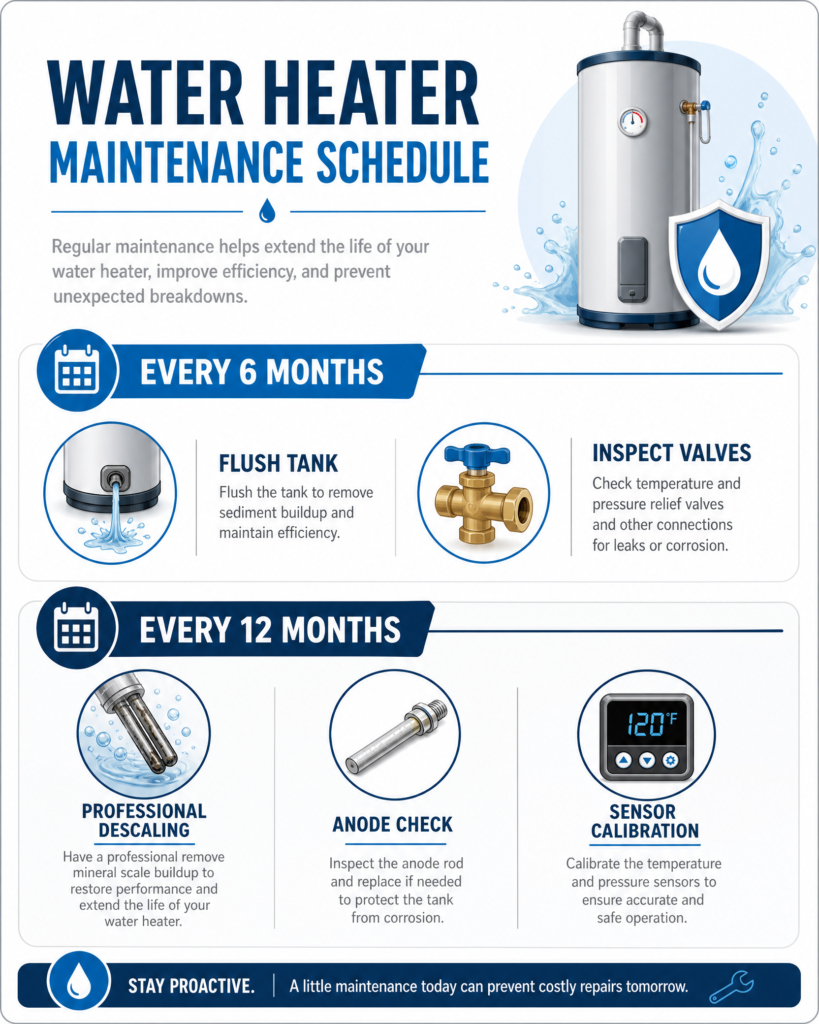
- Periodic descaling: Schedule descaling every 6 to 12 months depending on water hardness and usage. This clears mineral deposits from heat exchangers and storage tanks. For example, a two-story family home with heavy simultaneous hot water use may need biannual descaling, while a small apartment on softened water might only require annual checks.
- Sediment management: Flushing cold-water lines and the tank helps remove settled sediments that can cause pressure fluctuations and noise during operation. In practice, you can connect a hose to a drain valve and run water for 5, 10 minutes after turning off the heater to minimize disturbance during a maintenance window.
- Professional inspection: A technician checks for scaling hotspots, ensuring water flow remains steady and efficient. Expect a baseline report detailing exchanger condition, flow rate, and any mineral buildup hotspots, with recommended replacement timelines if degradation is detected.
Insulation and energy-efficiency practices
Proper insulation minimizes heat loss, lowers energy consumption, and reduces strain on central and solar systems. Well-insulated pipes and tanks keep water hotter for longer, improving comfort and cutting costs. In retrofit scenarios, even older homes can achieve meaningful gains by targeting the cold-water return line and exposed runs.
- Pipe insulation: Insulate hot water pipes up to the point of use to prevent heat loss along the run from the central or solar storage. A typical 6 mm to 13 mm thickness yields noticeable savings on monthly bills, and for long runs, consider reflective foil jackets on exterior sections to reduce radiant heat loss outdoors.
- Tank insulation: Verify that the storage tank has the appropriate insulation thickness and seal any gaps that allow heat leakage. If a tank is visible through a cabinet, upgrade to a model with a higher R-value or add a cavity cover to eliminate heat escape in winter months.
- Controller and sensor checks: Calibrate temperature sensors and verify controller set points to avoid overworking the heater while meeting household needs. Use a smart thermostat or timer to prevent continuous heating during unoccupied periods, and re-check after daylight saving changes when schedules shift.
- Usage optimization: Stagger hot water usage and utilize programmable timers where available to smooth demand and maintain system longevity. For example, run dishwashing and laundry cycles in non-overlapping windows, and set higher setpoints only during peak morning hours for comfort, lowering them at night to save energy.
FAQ
What are the signs my water heater needs repair?
Inconsistent water temperature is a major red flag. If taps fluctuate from lukewarm to scalding without adjustment, the thermostat or heating element may be failing. For example, a two-story home might notice hot water runs cold on the upper floor while the lower floor stays warm.
Fluctuating heating times mean the unit is working harder than it should. Shorter hot water cycles, longer waits, or uneven daily performance suggest sediment buildup or worn components. Plan a professional check before the problem escalates to potential tank failure.
Unusual noises such as rumbling, banging, or hissing can indicate mineral buildup or a defective burner. In a rental property, tenants may report these sounds first; quick diagnosis can prevent leaks.
Rising energy use without a change in usage signals inefficiency. If your energy bill creeps up despite similar hot water habits, your heater may be losing energy through a faulty seal or aging elements.
Visible leaks around the tank or connections point to repair needs or valve issues. Address pinhole leaks promptly to prevent water damage and mold growth, and inspect valves for proper shutoff function during maintenance visits. If you notice mineral buildup or reduced flow, schedule an inspection with Emiratefix to pinpoint central or solar system faults.
How do I choose between central and solar options?
Long-term energy goals guide the choice. If you aim to cut monthly bills and carbon footprint, a solar setup paired with a backup central heater can maximize savings over 7, 15 years depending on usage.
Roof space and climate considerations influence feasibility. Homes with ample southern exposure in Dubai can host more efficient solar collectors, while limited space or shading may reduce returns. A professional load assessment shows how many collectors and storage capacity you need.
Usage patterns and reliability needs matter. Central systems provide steady hot water for large households or high-demand appliances, whereas solar systems excel for daytime usage and overlapping peaks. Emiratefix can assess your family’s shower times, water heater cycle frequency, and hot water draw to tailor a mix of solar preheating with a backup electric or gas boost.
Emiratefix can assess your current configuration, water hardness, and usage to recommend a tailored solution for Dubai homes. For example, in high-hardness areas, a solar preheat paired with a descaling plan reduces mineral-related downtime and extends component life.
What maintenance schedule is recommended in Dubai’s climate?
Annual or biannual service is advised, with descaling more frequent in high mineral areas. In coastal districts with higher salinity, you might descal e every 6, 12 months. Regular inspections cover heat exchangers, valves, and pumps, plus sensor calibration.
Implement a documented maintenance routine: log inspection dates, replace sacrificial anodes if present, and test pressure relief valves quarterly. A staggered schedule ensures no component goes unchecked for more than 12 months.
Emiratefix can set up a maintenance plan that aligns with your system type, ensuring reliability throughout the year. The plan can include remote diagnostics for solar systems and on-site checks for tank integrity, with reminders aligned to your local seasons.
Summary: Regular signs of trouble, thoughtful option selection, and a structured maintenance cadence keep Dubai hot water reliable and efficient.
Conclusion
Key takeaways for choosing a repair service
Emiratefix delivers specialized care for central and solar water heater systems in Dubai. Look for technicians with hands-on experience across central storage and solar loop configurations, plus access to genuine spare parts.
- Local expertise: Services align with Dubai neighborhoods and climate realities.
- Rapid response: Fast dispatch and on-site diagnostics to minimize downtime.
- Comprehensive diagnostics: Thorough checks of thermostats, heating elements, valves, collectors, and pumps.
Steps to ensure reliable hot water year-round
Create a proactive plan that covers both central and solar systems. Regular checks prevent outages and boost efficiency.
- Schedule routine maintenance: Periodic descaling and system flushing to maintain heat transfer.
- Inspect insulation: Keep pipes and tanks well insulated to minimize heat loss.
- Calibrate sensors: Align temperature readings with actual water temperature to prevent overuse.
- Plan for seasonal demand: Match cycle usage to peak hot water needs to balance wear and energy use.
How to compare repair providers
Request a written service plan outlining diagnostics, parts sourcing, and a repair timeline. Clear estimates help manage budgets and expectations.
- Parts availability: Confirm access to authentic components suitable for Dubai conditions.
- Warranty terms: Look for at least 12 months on repairs and 5 years on major components.
- Transparency: Require an upfront diagnostic report and itemized quote before any work.
Common issues seen in central and solar systems
Recognizing typical failure modes helps you spot problems early and prevent outages.
- Corroded valves: Leaks or pressure inconsistencies signal valve wear; replace with compatible brass or stainless parts.
- Descaled heat exchangers: Reduced heat transfer prolongs heating times; perform descaling with appropriate safety measures.
- Faulty thermostats: Inaccurate readings cause overshoot or undershoot; recalibrate or replace with reliable sensors.
References
Add Your Review
Book a Service Now
Our team is ready to help — send your request in one minute